Close menu
Lang selector icon
    Person skating

    Grow your business with the leading B2B travel marketplace

    hotelbeds logo white

    The largest travel marketplace for wholesalers

    bedsonline logo white

    Curated travel portfolio for retail travel agents

    The Luxurist, part of HBX Group logo

    Luxury travel one-stop hub for retail travel agents

    Roiback logo white

    Direct Channel technology and services for hotels

    Civitfun, Part of HBX Group logo

    Suite of products digitalising front desk process for hotels

    HBX Group

    THE STRENGTH OF A B2B TRAVEL ECOSYSTEM BUILT FOR GROWTH

    The ecosystem where everything works seamlessly: robust travel technology, data-driven insights that inspire smarter decisions, local experts who know your market, and B2B travel platforms and services.

    Whether you’re looking to expand internationally, optimise performance, or access the latest tools – HBX Group brings you everything in a single, frictionless global travel marketplace of interconnected products.

    Want to know more? Discover our story and the value we bring to travel companies worldwide.

    Globe connected by lines and dots and the HBX Group circles around holded by a hand of a man in a suit

    Global reach powered by strong partnerships


    Expand worldwide through our trusted network of partners — driving demand and unlocking opportunities in every corner of the globe. 


    READ MORE

    Computer showing data and stats surrounded by HBX Group circles

    POWER GROWTH WITH TECHNOLOGY

    Stay competitive with robust technology and travel intelligence that turns data into smarter decisions.
    READ MORE
    Two hands shaking framed by the HBX Group circles

    SCALE AND SIMPLIFY WITH ONE PARTNER

    Streamline your travel ecosystem with one B2B platform – giving suppliers control and scalable solutions for distributors.
    READ MORE
    Two people working on a laptop framed by HBX Group circles

    LOCAL EXPERTISE WITH GLOBAL FOOTPRINT

    Grow confidently in every market with tailored local guidance and global support across 171 countries.
    READ MORE

    7billion

    searches per day

    450TB

    data lake

    c. 60,000

    travel distributors

    170+

    countries

    3500

    experts

    B2B travel solutions made for every type of business

    Every travel company has unique needs. Our goal is to provide the right solutions – whether you’re a hotel, travel agency, tour operator, or tourism board – so you can focus on what matters most: growing your business.

    A dinner table on a wooden harbour, with the sunset and a beach as background

    Solutions for hoteliers

    Boost bookings with B2B hotel distribution and hotel technology solutions that maximise your revenue.

    Read more about hotel distribution solutions
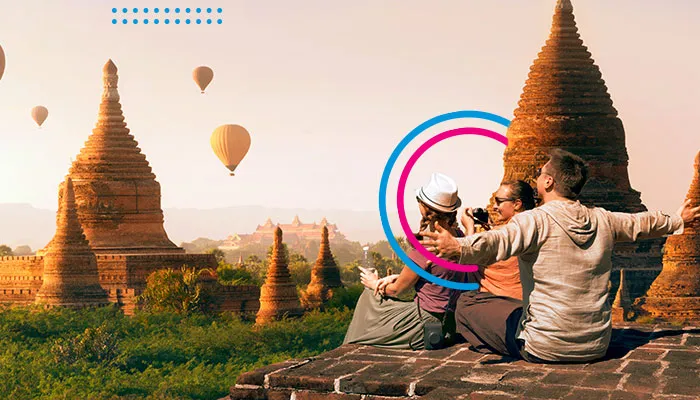
    Exotic landscape with round towers and baloons in the sky

    Solutions for tour operators

    Scale packages with our solutions: global inventory, seamless integrations, and memorable experiences.

    Read more about tour operators solutions
    Person open their arms looking at a resort with pool and palm trees

    Solutions for travel agencies

    Delight clients using a travel booking system offering hotels, transport, and experiences in one platform.

    Read more about travel booking solutions
    Bay village with crystal blue water and flowers at first sight

    Solutions for tourism boards

    Grow your destination with marketing tools, insights, and connections to reach global travellers.

    Read more about tourism marketing solutions

    TRUSTED BY TRAVEL BUSINESSES WORLDWIDE

    Technology and tools designed to grow your company

    Innovative products designed to help travel companies – and other businesses trying to maximise their revenue streams – grow quickly and securely. All within one interconnected ecosystem, created to make your day-to-day simpler and your results stronger.

    Icon: API word on a laptop

    API SUITE

    Fast, secure API solutions that connect your business to our global inventory. Reduce friction and increase operational efficiency.

    icon: Desktop computer and a magnifying glass

    BOOKING ENGINES

    Powerful booking engines for travel agencies and tour operators. Access hotels, transfers, and experiences in one B2B booking platform.

    icon: a person holding a flag

    MARKETING SUITE

    Marketing solutions for hotels and destinations. From exclusive advertising opportunities to loyalty campaigns, we help you attract travellers and boost visibility.

    Icon: Hotel building behind a Desktop screen

    HOTELTECH

    Smart hotel technology to digitalise front desk operations and turn your website into a powerful direct booking channel.

    icon: stack of bills behind a shield

    FINANCE AND INSURANCE

    Flexible funding, smart payment solutions, and tailored insurance designed to help travel businesses grow with confidence and control.

    The latest in travel trends and industry insights

    The travel industry is evolving rapidly, so we regularly publish fresh content in our Resources Hub to help you anticipate trends and gain insights that inspire innovation and business growth.

    hotel segmentation

    16 December 2025

    Why Strategic Hotel Segmentation Matters Now More Than Ever

    The days of a one-size-fits-all marketing approach in hospitality are long gone. Today’s travellers are more informed, more connected, and more demanding than ever before. Research from McKinsey & Company shows that 71% of consumers now expect personalised experiences, and 76% feel disappointed when they don’t receive them. But hotel personalisation is only part of the picture. To truly stand out, hotels need to understand who their ideal guests are, what motivates them, and how to reach them. This is where hotel market segmentation comes into play. In this article, we’ll explore what guest segmentation really means for hoteliers and the tangible benefits it brings. If you’re already applying segmentation, this guide will help sharpen your strategy. If you’re not, now is the time to start—because you are lagging behind! What is strategic hotel segmentation?As Patrick Torres, Vice President MEAPAC at HBX Group, explains: ‘Segmentation really is dividing broader markets into smaller sub-groups, characterised by elements such as demographics, geographics, behaviours and preferences.’ When applied effectively, segmentation empowers hoteliers to adopt marketing and pricing strategies for each market segment. Patrick adds: ‘It’s fantastic when you see a hotel catering to 100% corporate guests during the week, and then transforming to serve leisure travellers at the weekend. These are the things hotels are constantly looking to do.’ Segmentation, however, goes far beyond simple categories such as ‘male vs female’ or ‘domestic vs international.’ It is an ongoing process due to the following key factors that make segmentation more critical than ever: Rising consumer expectations: Travellers now demand personalised services shaped by technology, AI, and social media.  Globalisation: With audiences more connected, they are inspired to follow trends, and are no longer price-driven. As Torres notes: ‘We [as travellers] are looking for experiences, not discounts because time is precious, and if we need to pay for it, we will.’ External Situations: Fluctuations in the global economy (like the pandemic) directly influence travel and spending behaviour. Sustainability and ethics: Gen Z and millennials, in particular, are making choices based on social responsibility.  Intensifying competition: With platforms like Airbnb, hotels find it hard to differentiate. Segmentation factors hotels focus onTo truly understand and serve your guests, hotels typically look at four categories: Demographics: Age, gender, income, and education levels all influence travel choices. A budget-friendly millennial traveller has different expectations from a retired luxury couple. Geographics: Where your guests come from, their travel distance, and their habitual destinations all shape their preferences.  Psychographics: Lifestyle and personal values dictate our choices. Eco-conscious travellers value sustainability add-ons, while luxury seekers prioritise exclusivity.  Behavioural: Analysing booking patterns, length of stay, loyalty preferences, and purpose of travel helps us understand travel motivation. This is how hyper-specific segmentation can get. By identifying and adapting to these needs, you can define your own niche. Benefits of effective segmentationAccording to McKinsey, companies that grow faster generate 40% more of their revenue from personalisation, compared to slower-growing counterparts. For hotels, this illustrates just how powerful segmentation can be when applied strategically. Some key benefits include: Personalised experiences: By breaking your guest base into distinct groups, you can offer tailored services that make guests feel understood and valued. Revenue growth: Identifying untapped segments and guests with longer average stays allows you to increase occupancy, reduce turnover costs, and boost hotel profitability. Smarter pricing strategies: You uncover the value different guest groups bring, so you make more informed and competitive pricing decisions. Segment-based optimised marketing: When you focus your budget on the channels and campaigns that truly resonate with your highest-value segments, you get high ROI.  Operational efficiency: Segmentation can guide resource allocation across staffing, housekeeping, and amenities, lowering costs. Competitive advantage: When you know your niche audience, you can meet their evolving expectations better than competitors. How to implement segmentation strategies?Patrick Torres highlights the importance of a strong tech foundation: ‘Make sure you have the right CRM and PMS system and that they integrate with each other.’ Steps to put segmentation into practice include: Collect and analyse guest data: Draw insights from every touchpoint: reviews across platforms, guest exit surveys, and Google Analytics. Track how guests book, what they order, and how they behave during their stay. Leverage distribution channel data: Regularly monitor performance across key channels: walk-ins, OTA, website, GDS or travel agents. Develop guest profiles: Consolidate your insights into clear profiles that capture who your guests are, what they value, and how they book.  Measure profitability by segment: Go beyond ADR and evaluate the exact value of each segment based on cost of acquisition, ancillary revenue and other experiences. Look at length of stay and operational impact. Create actionable segments: As Torres notes: ‘The second key thing is how you create these segments. It’s about balancing granularity with simplicity – maintaining actionable segments that resonate with your product.’ For example, instead of simply targeting female travellers, consider focusing on mum travellers. Design tailored packages and promotions: Adapt your promotions accordingly. Adventure seekers may respond to hike+yoga packages, while sustainable travellers may look for farm + dining experiences. Apply targeted hotel marketing and hotel distribution: Use the right OTAs, channel managers, and marketing platforms to reach each segment where they are most active. How to overcome hotel segmentation challengesSegmentation is not easy, it comes with its fair share of challenges. Patrick Torres advises: ‘Start small and scale slowly. Begin with a few key segments and then expand gradually. Focus on the markets with the highest return. Explain the ROI internally and foster a data-driven organisation.’ Data protection and compliance: Be transparent about how you collect and use guest data. Invest in robust data security technology and ensure full compliance with local and international regulations. Technology investment: Smart and advanced hotel management systems, from integrated CRMs and PMSs to advanced channel managers are critical to unlocking the full potential of segmentation. Evolving travel trends: Guest expectations are constantly shifting, from the rise of Gen Z travellers to the growing demand for sustainable experiences. Regularly review and adapt your segmentation strategy. Cross-department alignment: Segmentation impacts decisions across operations, sales, revenue and your marketing departments. Provide training for your teams, ensure proper system integration, and embed segmentation into your hotel’s culture. The future of hotel segmentationThese are the factors that will define the future of segmentation: AI and machine learning: Automating routine tasks, so teams focus on magical human-guest interactions. Predictive analytics: Anticipating demand and traveller behaviour for smarter dynamic pricing and targeted offers. Sustainability: Important for Gen Z and millennials; eco-friendly practices are now a key decision factor. Ethical Data Usage: Guest privacy and transparency will be non-negotiable. Smart Hospitality: Hyper-personalised in-room and on-property experiences powered by AI. Now is the time to review your current approach. Are you aligning your operations with the segments that truly drive value? And if you want to better understand your audience and boost performance? HBX Group is here to help you make smarter, data-driven decisions. Get in touch with us today to start segmenting more strategically. Register your property 
    Read More
    gen z travellers header

    9 December 2025

    4 Smart Tactics Hotels Can Use to Attract Gen Z Travellers

    If, three decades ago, someone had predicted that the newly born generation would account for 40% of the global consumers and that appealing to them would become a core objective of hotel marketing strategies, it might have been difficult to believe. Yet today, this is a reality. Not only are Gen Z travellers reshaping demand today, but together with Millennials, they are projected to represent 83% of hotel guests by 2030, according to LG Business Solutions. For hoteliers, this demographic shift brings both challenges and opportunities. Gen Z travellers are not driven by traditional loyalty, but by authenticity, digital fluency, and values-led experiences. For them, travel is an expression of identity and a means of self reflection. This article provides practical guidance on how hoteliers can adapt to Gen Z travel trends while highlighting how HBX Group can support you in staying competitive in this evolving landscape. Why are so many Gen Z travelling?Born between 1997 and 2012, Generation Z represents the first true cohort of digital natives—a generation raised with smartphones, social media, and instant access to global information. Already accounting for 30% of the global population and around 40% of world consumption (as per Brittany Ferries), travel is one of their top priorities. Gen Z travellers are adventurous, curious, and values-driven. The European Travel Commission highlights that younger travellers are more likely to explore lesser-known destinations, return repeatedly to places they connect with, and contribute to local communities. They are drawn to experiential travel, where cultural immersion, authentic local experiences, and sustainability intersect.These facts show that for Gen Z, travel is more than holidays. It is a meaningful time spent on self-discovery, identity, and well-being. According to Brittany Ferries, 93% of Gen Z agree that travel experiences positively impact their mental health. Notably, 84% would prefer having a holiday over purchasing a new luxury item as per American Express, proving that experiences outweigh possessions. As the most digitally connected generation, Gen Z travellers research and book trips primarily through social media, reviews, influencers, and mobile-first platforms. Personalised content, AI-driven recommendations, and fintech-enabled flexibility strongly influence their decisions. As a hotelier, these traits should not be seen as just another set of traveller habits, but as critical signals to adapt your offerings. Major hotel revenue lies in meeting these evolving preferences.According to American Express, 74% of Gen Z plan to take 1–3 domestic trips in 2025, while 59% intend to travel internationally at least once during the same year. With an estimated $143 billion in direct spending power, Gen Z are not only frequent travellers but also high-value guests ready to engage with hotels that align with their choices and expectations. Hotel marketing strategies to attract Gen ZTo appeal to the Gen Z travellers, think and act like them. ‘For hoteliers, this means redefining travel marketing strategies. Segment products by experiences such as wellness, adventure, and sleep tourism, while showcasing accountability and authentic brand values,’ states Javier Cabrerizo Postigo, Chief Strategy & Transformation Officer at HBX Group.Become tech-savvyGen Z are the first true digital natives, and technology is embedded into their travel expectations. What Gen Z wants from hotels is tech-driven convenience. Many are already engaging with AI and automation: 21% have used chatbots for trip planning, and they expect wait-free service during their stays. Actionable steps for hoteliers: Introduce service robots for fast, discreet, and 24/7 in-room deliveries. Offer digital concierge services powered by AI for personalised itineraries. Provide seamless connectivity for streaming platforms, gaming, or entertainment—Gen Z values the ability to personalise their downtime. Communicate these upgrades across your marketing to strengthen your property’s digital identity. Be where Gen Z travellers areThe first time a Gen Z traveller sees your hotel is mostly on a smartphone. Around 80% of Gen Z travellers use their smartphones to research and book trips (Brittany Ferries).Short-form video dominates their planning behaviour: 70% use TikTok as a trip-planning tool, and they trust in online reviews more than traditional advertising. Actionable steps for hoteliers: Design your websites aesthetically for fast loading on mobile phones. Share authentic stories through TikTok, Instagram Reels, or YouTube Shorts. Highlight your CSR practices prominently to connect with them. Use AI-driven automation/chatbots to recommend personalised itineraries. Actively collect and showcase guest reviews across digital platforms, making them visible during the booking journey.Gain their trust on social networksGen Z identifies strongly with travel, and they enjoy posting on social platforms to boast their experiences as part of their identity. Apart from online reviews, influencers play a central role in shaping their travel decisions. In fact, 45% of Gen Z trust travel recommendations from influencers, according to Perk. Actionable steps for hoteliers: Collaborate with micro-influencers to create real-time content during their stay. Encourage user-generated content by designing “Instagrammable” spaces: rooftop views, elegant dining areas, or quirky photo booths. Run interactive campaigns such as challenges, polls, or giveaways to engage Gen Z on their favourite platforms. Show them you care with personalised offeringsGen Z travellers are demanding—they want unique, flexible, and values-based experiences. According to HotelMize, 38% of Gen Z travellers consider a unique experience the most important element of a great holidays. Similarly, 61% prioritise wellness on their trips, and 70% actively seek off-the-beaten-path experiences. Actionable steps for hoteliers: Provide flexible booking policies and non-traditional schedules, such as late breakfasts, all-day dining options or contactless check-ins. Curate experiences rooted in local culture with language-friendly services, guided community activities, and cultural immersion. Embrace multi-generational travel trends: 58% of Millennials and Gen Z parents plan to bring extended family on holidays in 2025, as per American Express. Offer remote work–friendly spaces and 'bleisure' packages that combine productivity with pleasure. Embrace sustainable practices such as EV charging stations, solar-powered energy, locally sourced food etc. Gen Z are more likely than other age groups to consider sustainable travel options, with 56% saying they'd want to stay in green or eco-friendly accommodations (Expedia Group), electric vehicle charging stations Get on the current travel trends and adapt to wellness tourism, adventure tourism, and sleep tourism. Self-care is a significant focus for Gen Z travellers, with 61% prioritising travel plans that include wellness experiences. Use AI-driven automation to personalise upsell offers, such as a sunset cruise for couples or yoga sessions for adventure travellers.We can help you attract Gen ZTraditional marketing channels are fragmented, and many internal teams lack the time or expertise to manage complex campaigns. HBX Group provides a full-service marketing solution that simplifies strategy, execution, and reporting, delivering instant visibility with zero setup. By partnering with HBX Group, you gain: Global distribution reach: Access c.60,000+ travel distributors, including 50,000 travel agencies and 3,500 tour operators. Trusted network: Join over 250,000 hotels already working with us across 190+ source markets.Opaque channels: Reach high-value customers without affecting your direct sales channel. Local market expertise: 1,400+ market-based specialists act as an extension of your sales team, influencing how distributors promote your property. Gen Z-focused solutions: Tailored campaigns designed for socially driven and experience-led travellers all around the globe. Partner with HBX Group to strengthen Gen Z trust in your brand and grow your Gen Z bookings for long-term success. Register your property
    Read More
    new year eve hotels

    21 November 2025

    New Year’s Eve Hotel Events: Ideas for Packages & Promotion Tips

    As the year winds down, there's one night that stands out on every hotelier's calendar – New Year's Eve. This is a golden opportunity for your hotel to turn this celebration into a revenue-generating event.  In this article, we delve into the significance of New Year's Eve for hotels, offering insights on how to craft unforgettable experiences for your guests. From themed packages to irresistible dinners and marketing tips, we've got your New Year's Eve covered.Why is this night special for hoteliers?While the Christmas season already brings joy and an increase in bookings, New Year's Eve stands out as a key night for creating memorable experiences and boosting revenue. This event attracts not only hotel guests but also individuals seeking an unforgettable way to bid farewell to the year. Guests often extend their stay for 2 or 3 nights, choosing the convenience of enjoying the festivities without the hassle of preparing meals. Renowned chefs, gala dinners, fireworks, and open bars are just a few reasons why more people opt to spend New Year's Eve in a hotel, seeking a unique experience. Celebrating in a hotel provides ample space for large family gatherings or groups of friends, enhancing the sense of community and festivity.What can you do to make the most of it?Special offers for New Year's EveBy strategically designing offers that cater to different preferences, hoteliers can maximise bookings and create a diverse and vibrant New Year's Eve celebration at their establishments. Check out some ideas for creating the most attractive packages. Early Bird Specials: Create a sense of urgency and entice early bookings by offering special discounts for guests who confirm their New Year's Eve dinner reservations well in advance. This not only ensures a committed guest base but also provides an initial boost to bookings. Exclusive Access Passes: Introduce exclusive access passes that include premium benefits such as a reserved table in a prime location, priority service, and free champagne. This caters to guests seeking a VIP experience and adds a touch of luxury to the celebration. Group Discounts: Encourage group bookings by offering attractive discounts for larger parties. This is especially appealing for families and friends planning to celebrate New Year's Eve together, providing an incentive to choose your hotel. Flexible Seating Options: Cater to different preferences by offering flexible seating options. Allow guests to choose between intimate private tables, communal dining for a social atmosphere, or even outdoor dining options. Join our New Year's Eve campaignAmong HBX Group's global marketing initiatives, our New Year's Eve campaign is one of the most successful, along with our Black Friday promotions. This is a great opportunity for property owners to increase their visibility in our network, which includes c. 60,000 distributors, like travel agencies, airlines, bank institutions, tour operators, and more.  We discussed earlier in this article that New Year's Eve is one of the key periods in the year when hotel room demand is high. HBX Group plays a crucial role here by offering the best hotels to our wide network of travel distributors.  And how do we do it? We implement a wide range of promotional actions, including mass email campaigns, banner placement on our booking engines, the creation of dedicated landing pages, and promotion on social media, among other initiatives. This way, we reach a global audience eager to benefit from this highly beneficial campaign. Here are all the details you need to know: The booking window for travel distributors will be from 30th December 2025 to 9th February 2026. As for the travel window, customers will be able to travel between 30th December 2025 and 31st December 2026.   If your property is already registered with HBX Group, you will receive detailed information via email about the campaign. If you haven’t registered yet, join us by simply clicking on the link below. Once the form is completed, we will contact you to guide you through the onboarding process, so you can start distributing your rooms as soon as possible.  Register your property Now is the time to offer the best conditions to attract high-value guests, as many plan their trips in advance during this period. Ready to make a great start to the new year?  Hotel New Year's Eve PackagesApart from offering special promotions for this event, you should consider crafting original, enticing packages to attract more bookings. Themed packages can serve well for this purpose, and here you can get some ideas. Classic New Year's Eve Package: One-night accommodation, gourmet dinner at the hotel's restaurant, access to the New Year's Eve countdown party, a midnight champagne toast, and late check-out on New Year's Day. VIP Luxury Package: Including a luxurious suite, a private dinner in-room or at the hotel's restaurant, exclusive VIP party access and a free champagne bottle, spa treatments and a couples' massage on New Year's Day. Family Fun Package: Create family-friendly packages with special children's menus and entertainment suitable for all ages. This ensures that families feel welcome and comfortable celebrating New Year's Eve at your hotel. Also, provide them with the option to book connecting rooms. Adventure and Outdoor Package: If the weather is good and your property has the facilities, you can offer accommodations in cosy cabins or glamping tents, and a special outdoor New Year's Eve dinner. Themed Party Package: Specially designed for groups of friends, you can offer a themed New Year's Eve party with costumes (e.g., The Great Gatsby, a masquerade ball), live entertainment, and special cocktails, and a themed brunch or breakfast the following day. Wellness and Detox Package: Following this travel trend, you can cater to travellers looking for a relaxing farewell to 2024 by offering yoga sessions, a detox-focused dinner for New Year's Eve, spa access, and guided nature walks on New Year's Day. Leverage add-ons like spa services, champagne in-room, and late check-out for additional revenue. Utilise the Christmas season to sell restaurant and spa services, targeting guests who have already booked for the holiday season. Ideas For New Year’s Eve Dinner at Your HotelIn order to increase bookings for the dinner, you can go the extra mile and come up with original proposals. For example, you can create a ‘global feast experience’ by offering a New Year's Eve dinner with a selection of dishes from around the world. Also, a fusion-themed menu can be innovative and exceed your clients' expectations, such as an Italian-Japanese fusion menu, which is trendy nowadays. Another good idea would be to embrace the ‘farm-to-table’ concept for this special dinner by featuring locally sourced and seasonal ingredients. You could collaborate with nearby farmers to create a sustainable and environmentally conscious dining experience. Creating a 'photocall' is always a fantastic way to encourage guests to share their pictures with friends on social media. This way, you'll get free visibility about your event and reach potential guests interested in your hotel and facilities. Provide wigs, masks and other festive accessories for your attendees. And don't forget to include some branding in the photocall space, like your hotel name or a specific hashtag you create for the event. Also, why not choose a specific theme for the dinner party? Themes such as a masquerade ball, a black etiquette party, a tropical New Year's Eve party, or an all-white party can take your New Year's Eve dinner to the next level and make it unforgettable due to its originality. If you decide to implement this idea, don't forget to decorate the dining room accordingly. By doing so, you'll stand out from the competition and attract both tourists and locals to your hotel. When it comes to decor, remember that ambiance is crucial to the success of the event. Partner with a local decoration business for original decor ideas, establishing a collaboration for future events. Finally, consider hiring a photographer to capture professional photos of the event. This will provide you with valuable visual content for social media and other online channels, such as your website, emails, etc. How to Promote Your New Year's Eve EventThe first step in planning your event is deciding what it will look like and what it will include. The next step is to promote the event and reach as many potential attendees as possible. Here are some ideas for promoting your event both online and offline.On Social Media:Build anticipation: Use various content formats to create excitement and interest in your upcoming event. Regarding content formats, consider creating carousels with images explaining what the event is about and the price, a single image with all the info, and short videos for Reels/Stories/TikTok where you show a recap video from last year and a member of your team explains what the current event will look like.You can also generate excitement and urgency by launching flash sales or limited-time discounts exclusively on social media platforms. Influencer Outreach: Collaborate with influencers to reach both local and international targets. Ask them to tell what the event is all about and what makes your property special in order to entice visitors. You can offer this person free access to the event and a free stay in exchange.  Leverage User-Generated Content: Create a special New Year's hashtag related to your event and encourage your attendees to use it and tag you. Afterwards, share their posts through stories and save them in a new 'Highlights' folder under the name ‘NYE 2024’. In preparation for New Year 2025, you can always revisit this folder and reshare some posts to build anticipation. Other online and offline channels:Email Marketing: Send promotional emails with early bird discounts to your database. Website promotion: Update your website with a dedicated section or banner explaining the event and what it includes.  Offline promotion: Print flyers, create short local radio ads, and use billboards to reach a wider audience.Encourage Guest Testimonials and ReviewsSeek feedback after the event through a variety of channels, such as email, WhatsApp, Google, or TripAdvisor reviews.In case you contact them directly through email or WhatsApp, you could take the opportunity to send them a survey. Positive testimonials build trust and credibility, attracting new guests for next year's celebration.  Throughout this article, we've explored why New Year's Eve is a great opportunity for hoteliers to not just celebrate, but also increase revenue streams. From crafting themed packages that entice guests to curating unforgettable New Year's Eve dinners and leveraging smart marketing strategies, we've shared insights to ensure your hotel shines amidst the festivities. Additionally, HBX Group and our portfolio c. 60,000 partners can help you gain exposure to those travel distributors seeking special New Year's Eve offerings. If you already work with us, update your details for this special night on our Partner Portal. On the contrary, if you are not yet a member, register your property now by clicking on the link below, and in a matter of days, you'll be able to access our extensive network. Register your property
    Read More
    Gen Z's Travel Revolution: an image showing the smiling face of a young traveller, emphasising their role and influence in the tourism space. This image accompanies an article on the topic.

    20 November 2025

    Gen Z's Travel Revolution

    Disclaimer: This article was first featured in our annual MarketHub Pulse magazine, published prior to November 2025. For this reason, there may be some discrepancies in details, such as positions held at the company. Access your complimentary copy of MarketHub Pulse Review by clicking here. What’s the future of travel? Ask the younger generations – they’re the ones paving the way.Gen Z emerged as a hot topic at this year’s MarketHub, dominating the agenda at each of our regional events with good reason: this is a demographic which represents 30% of the global population, and 40% of world consumption. Furthermore, their behaviours vary significantly from those that came before them: owing in no small way to the fact that this is the first digitally-native generation, Generation Z is inherently connected to the online world, and it's here where their preferences take shape, from the dreaming phase through to booking and far beyond. HBX Group’s Chief Strategy and Transformation Officer, Javier Cabrerizo, wasted no time communicating the power of this all-important demographic to audiences across each event, stating that not only does Gen Z travel tend to be more lucrative (with 2 to 3 travellers choosing a ‘luxury’ experience and spending 20% more than the average traveller), but that the experience is typically all-encapsulating. Cabrerizo revealed that: Gen Z prioritise experience over goods, making them a prime target for mobility and experience providers;They are cautious, with 60% purchasing an InsurTech product before travelling;And that if their experience isn’t shared online…well, did it ever really happen at all? According to Cabrerizo, 90% of Generation Z choose social media as their primary form of communication, representing a two-fold opportunity: firstly, for travel providers to carve out a space in front of their desired audience through marketing, and to enjoy the residual benefits of having the experience they crafted, signal-boosted across the web.  This latter point was further underscored by Bertrand Sava, Director of New Business and Ventures  at HBX Group. In his keynote, ‘The Re-Emergence of the Travel Agent’, Sava emphasised the relationship between two unlikely parties: the traditional RTA, and travel’s youngest cohorts. According to Sava, appealing to younger travellers is fundamental to future success in the retail space: after all, studies reveal that 40% of Gen Z and Millennials turn to travel advisors (TAs) to plan their trips, versus just 14% of those aged 40 and up. Casting the net wider, it’s reported that 65% of travellers feel overwhelmed by the number of choices when planning their trips online, and interestingly, digital natives are among the most impacted: according to Wattpad, 43% Gen Z and Millennials have begun to make an active choice to reduce the amount of time that they spend online. Disconnecting from the social sphere appears unlikely, but a conscious movement known as ‘de-influencing’ has gained prevalence: rather than buying into the glamour of social media marketing of old, Gen Z are becoming increasingly aware that such content may not always be truthful. Instead, they rely on the recommendations of trusted sources – and who better to advise, than the advisor themselves?  Travel advisors have (re-)emerged as indispensable, bringing clarity and reassurance in a world which, often, feels anything but. Furthermore, these are times where speed reigns supreme: indeed, like many of us, Gen Z are subject to high levels of stress, with 74% citing ‘feeling stressed’ either often or very often as their greatest social issue. Recognising this and stepping into the role of an end-to-end service provider will set travel advisors apart, said Sava: by granting customers the much-needed luxuries of both support and time, TAs can earn the loyalty of the generation said to possess a higher spending power than any other. Better yet? In alignment with Cabrerizo’s point of view, Sava shared that the social media experience could become full-circle, with advisors being rewarded for their effort: happy travellers put emphasis on the key facets of their experience, including how and where the booking was made. Agents can expect to be tagged or even shouted out in social posts; what’s more, by building a genuine rapport with their customers, they may be able to tap into a wealth of user-generated content. This ability to re-share high-quality, authentic photos and videos of their clients’ trips on their own channels is an invaluable mode of marketing, further demonstrating the power of a reciprocal bond forged through a dynamic alliance.  But it’s not only travel behaviours which are evolving under Gen Z – in fact, those born between 1997 and 2015 are also shaping expectations related to employment. Given that by 2035, Gen Z will be the largest generation in the workforce, getting to grips with what makes them tick is going to be fundamental. It is thought that 100 million jobs are set to be created in travel and tourism in the next 10 years – over the same period, it’s estimated that all industries will be subject to a global talent shortage of 85 million people. So, how can employers stand out in what is likely to be an increasingly competitive market? Capturing the imagination of this vibrant demographic is going to be vital – and according to Liz Ortiguera (former WTTC), this all begins with branding. ‘Tourism has a branding problem,’ she declared at the MarketHub Asia in Macau. ‘Many outside the industry see travel as purely entry-level, transient, with poor work conditions, and lacking upward mobility. Rather, travel is the ultimate experiential career path of choice, with global opportunities and leadership potential.’ Rebecca Collins, Senior HR Business Partner at HBX Group, concurred. During her keynote ‘Expanding Talent Horizons’ at the MarketHub Europe, Collins emphasised that a stronger employee value proposition is a necessary part of the appeal; in particular, employers should seek to connect this generation’s personal values: ‘Our mission at HBX Group is to transform travel into a force for good, and our employee value proposition links the organisation purpose and talent strategy to the employee experience.’ She continued, ‘We can, and must, leverage our ability to provide policies and benefits that enable employees to combine their passion for travel with their work.’ What actions could today’s travel players take to appeal to the discerning candidates of tomorrow?Change the narrative around travel: Leverage media and storytelling to connect to a generation in search of fulfilment. Whether appealing to their sense of adventure or their personal values (such as sustainability and equality), businesses should focus on crafting messaging which resonates with their key emotional drivers. Reinvent workplace culture: Build your employee value proposition (EVP) around better conditions and greater respect. For a demographic as broadly conscientious as this, employers must demonstrate that there is zero tolerance for harassment and disrespect; instead, embracing all walks of life, with policies crafted around the legitimate needs of their workforce – be that improved flexibility (hours, location), improved maternity/paternity leave, or otherwise. Offer better development opportunities: ‘How is this role going to enrich their lives, both professionally and personally?’ This was the question posed by former HBX Group Senior Vice President of Sales, Pippa Williamson. ‘We need to recognise that everyone is a global citizen – if you are able to fish in a larger ocean [of candidates] and are open to bridging cross-cultural divides, you have the opportunity to bring in some real talent.’ Connecting multi-culturalism to developmental growth, Williamson reflected on the benefits: ‘Multi-cultural teams are far more well-rounded – don't underestimate the enrichment that comes from the different angles and values that come from global teams.’ Expanding on Williamson’s view, Collins shared a piece of advice of her own: ‘Skills are becoming the new currency of work, and we must prioritise adaptability, continuous learning and investment in employee skills. This might be through cross functional project-based work or targeted individualised development plans.’ In closing, she concluded:‘What is clear is that ours is an industry which can offer a seriously attractive proposition for talent: combining a strong sense of purpose; a hugely diverse, global workforce; a clear appetite to embrace new technologies, leading to exciting and satisfying careers for all.’See more from the MarketHub in our exclusive magazine, featuring travel insights, interviews with thought leaders, and hot topics from our regional events. Click to access your free copy now.
    Read More

    TAKE THE NEXT STEP WITH THE LEADING B2B TRAVEL MARKETPLACE

    You’re just one step away from joining the global travel marketplace that connects thousands of travel companies with technology, data, and expertise.